Misconfiguration
Security
Best Practices
Common Misconfigurations That Lead to Data Breaches
ThreatMate Team
Aug 10, 2023
4 min read

Configuration: The Overlooked Attack Vector
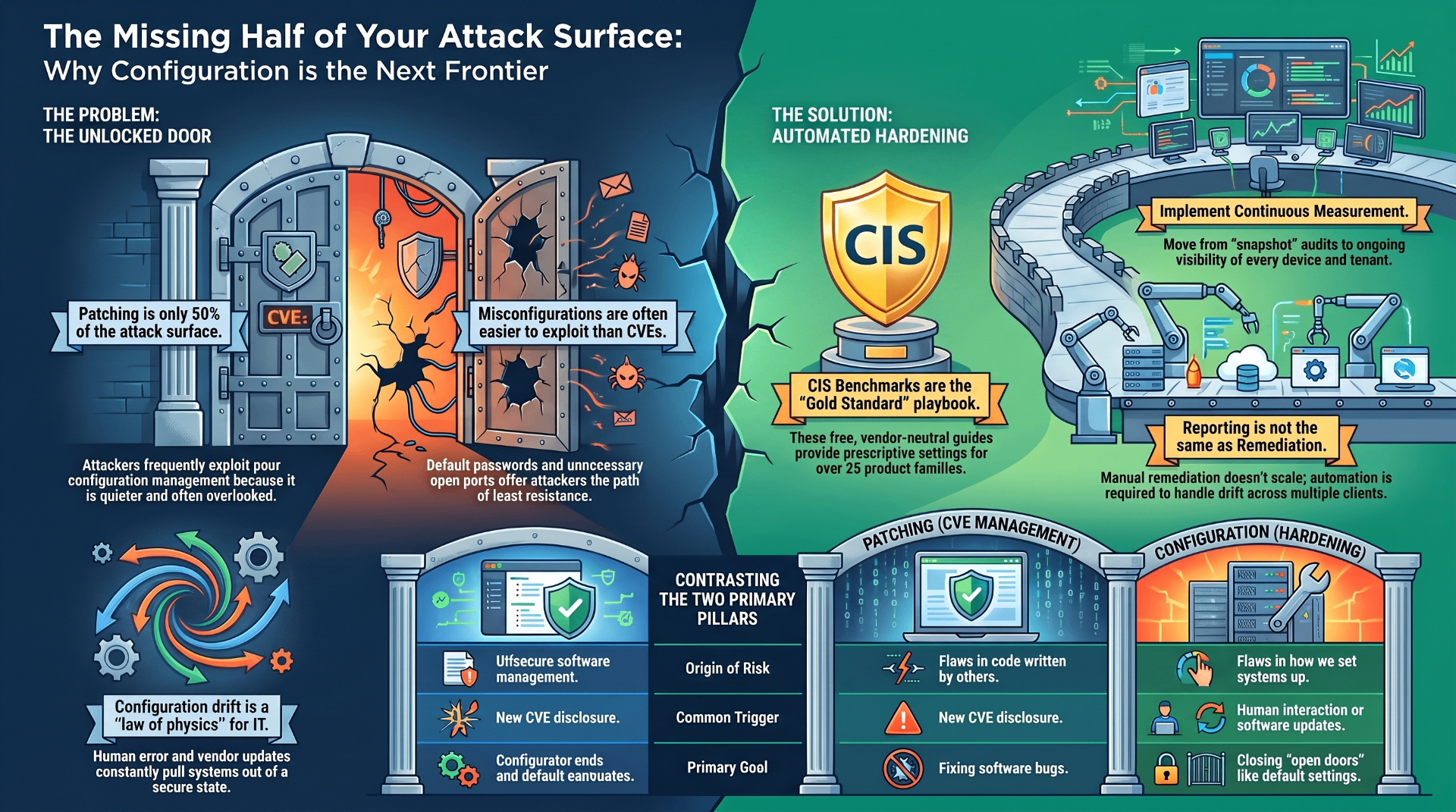
While headlines focus on sophisticated attacks, most breaches result from simple misconfigurations: - Open cloud storage buckets - Default credentials - Overly permissive access controls - Missing security features
Top Misconfigurations to Watch
Cloud Storage - S3 buckets with public access - Azure blob containers without authentication - Google Cloud Storage ACL misconfigurations
Identity and Access - Default admin passwords - Service accounts with excessive privileges - MFA exceptions for "convenience" - Stale user accounts
Network Services - RDP exposed to the internet - SSH with password authentication - Database ports accessible publicly - Unrestricted API endpoints
Email and Communication - Missing SPF/DKIM/DMARC - Auto-forwarding enabled - External sharing unrestricted
Prevention Strategies
- Configuration baselines — Define and enforce standards
- Continuous monitoring — Detect drift from baselines
- Automated remediation — Fix issues before exploitation
- Regular audits — Periodic comprehensive reviews
ThreatMate Detection
ThreatMate continuously monitors for dangerous misconfigurations across your attack surface.
Ready to secure your attack surface?
See how ThreatMate helps MSPs identify and remediate vulnerabilities across their client base.