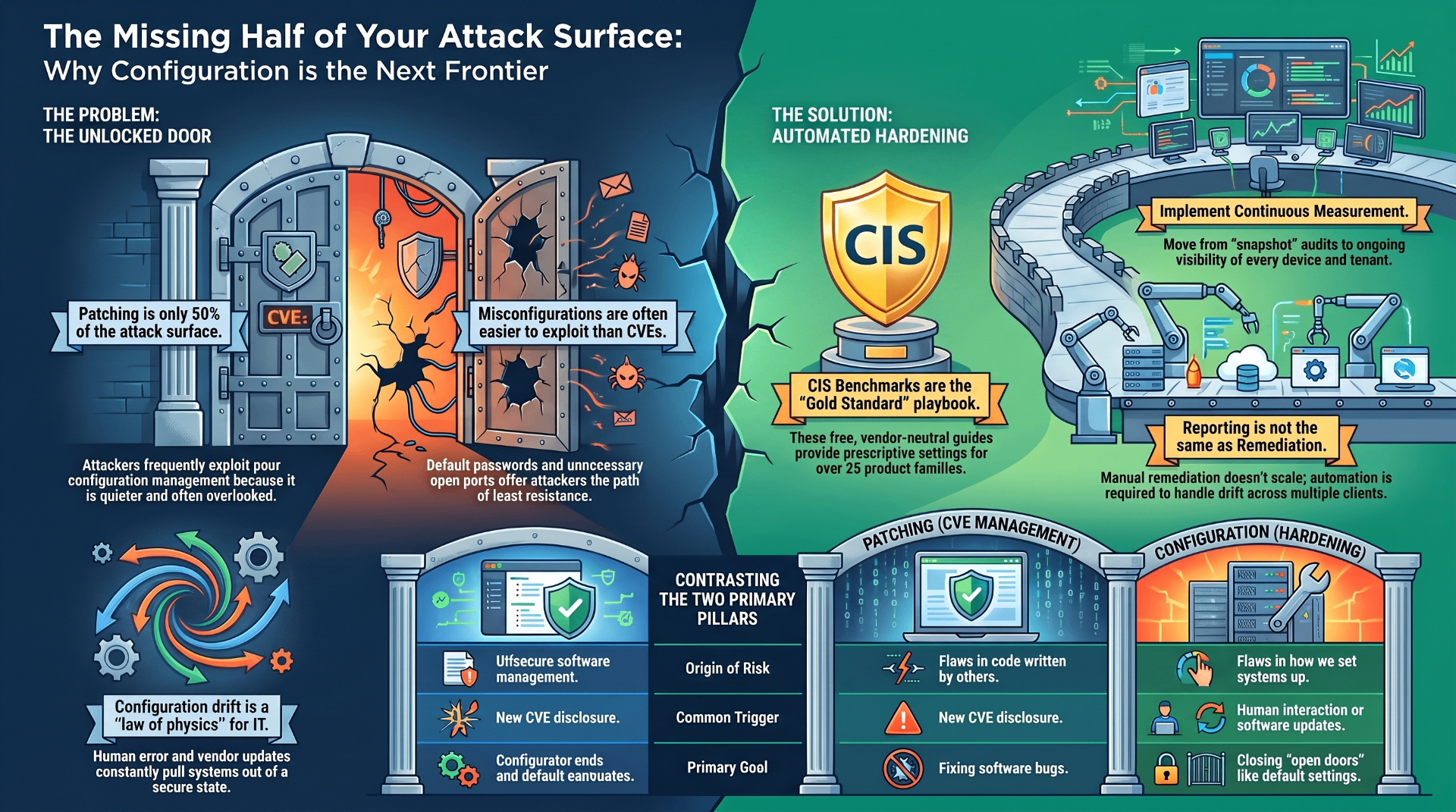
Attack Surface
Vulnerability Management
Security
How is Attack Surface Management Different from Vulnerability Management?
ThreatMate Team
Feb 11, 2024
4 min read

Defining the Terms
Vulnerability Management Traditional vulnerability management focuses on identifying known vulnerabilities in known assets. It relies on scanning tools, CVE databases, and patch management.
Attack Surface Management (ASM) ASM takes a broader view: discovering all assets (known and unknown), understanding exposure, and continuously monitoring for changes.
Key Differences
| Aspect | Vulnerability Management | Attack Surface Management |
|---|---|---|
| Scope | Known assets | All assets (including shadow IT) |
| Focus | CVEs and patches | Exposure and risk |
| Frequency | Periodic scans | Continuous monitoring |
| Perspective | Internal | External (attacker's view) |
Vulnerability management tells you what's wrong with assets you know about. ASM tells you what assets exist and how they're exposed.
Together, they provide complete visibility:
- ASM discovers what's exposed
- Vulnerability management identifies what's vulnerable
- Prioritization combines both to focus on what matters
The ThreatMate Approach
ThreatMate combines ASM and vulnerability management in a single platform, giving MSPs complete visibility into client attack surfaces.
Ready to secure your attack surface?
See how ThreatMate helps MSPs identify and remediate vulnerabilities across their client base.