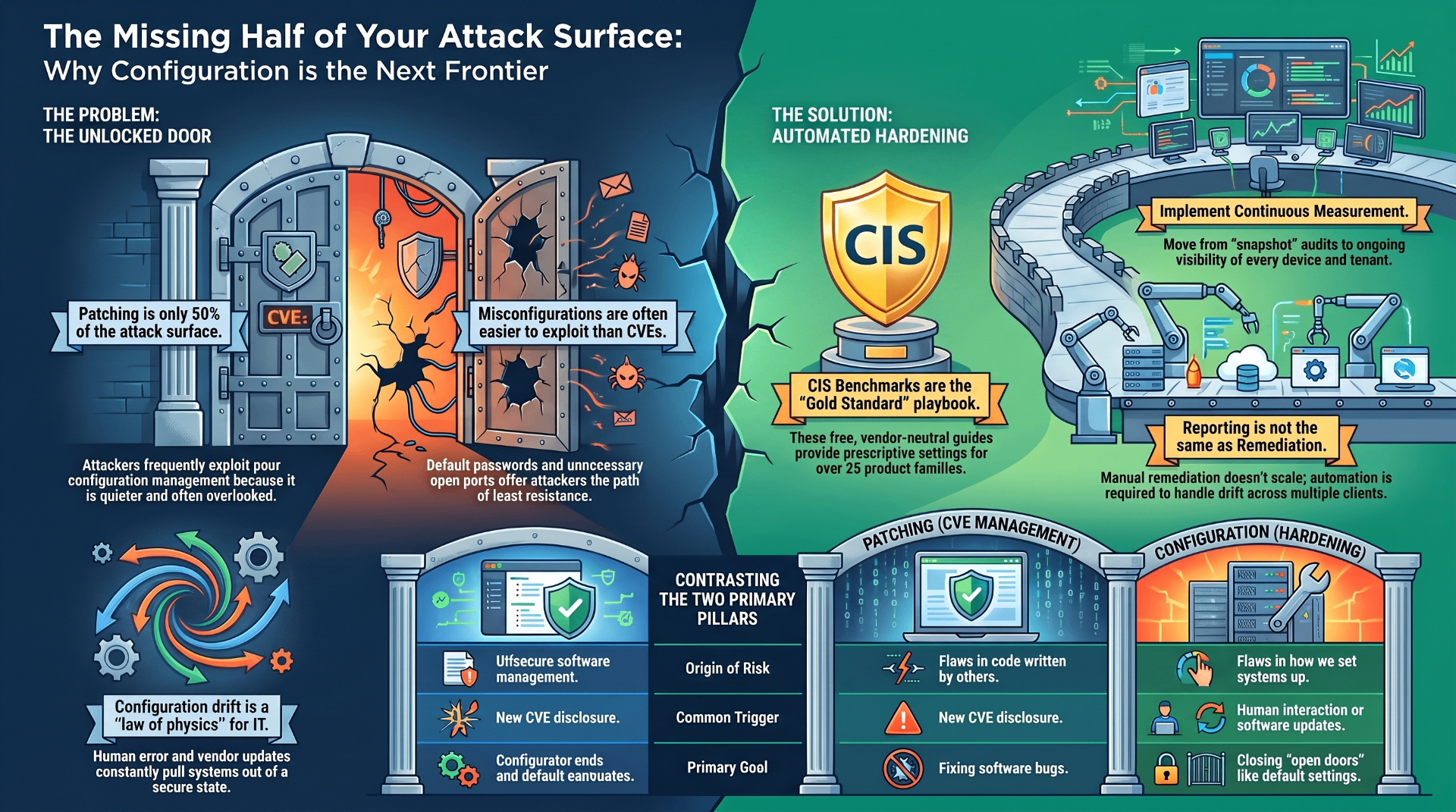
Attack Surface
ASM
Security Fundamentals
Introduction to Attack Surface Management
ThreatMate Team
Nov 1, 2022
4 min read

What is Attack Surface Management?
Attack Surface Management (ASM) is the continuous process of discovering, classifying, and monitoring all external-facing assets and their potential exposures.
The Attack Surface
Your attack surface includes everything an attacker could target: - Websites and web applications - APIs and microservices - Cloud infrastructure - Email systems - Remote access points - Third-party connections
Why ASM Matters
Shadow IT Organizations don't always know what's exposed. Shadow IT, forgotten systems, and acquired companies create unknown attack surface.
Constant Change The attack surface changes constantly: - New services deployed - Configurations changed - Certificates expire - New vulnerabilities discovered
Attacker Perspective ASM shows you what attackers see — the view from outside your network.
ASM vs. Traditional Security
| Traditional | ASM |
|---|---|
| Known assets | All assets |
| Point-in-time | Continuous |
| Internal view | External view |
| Manual inventory | Automated discovery |
- Discover — Find all external assets
- Inventory — Classify and prioritize
- Assess — Identify exposures and risks
- Monitor — Detect changes continuously
- Remediate — Address findings
ThreatMate provides comprehensive Attack Surface Management for MSPs.
Ready to secure your attack surface?
See how ThreatMate helps MSPs identify and remediate vulnerabilities across their client base.