Understanding the OWASP Top 10: What MSPs Need to Know in 2025
The Download
If you support small and mid-sized businesses, you already know that web applications are at the center of almost everything your clients do. From customer portals to internal tools, invoicing systems to CRM platforms, the web app is often the front door to the business.
That also makes it a prime target. Web applications are where user input meets backend logic, where authentication can break down, and where data can be exposed. This is where the OWASP Top 10 comes in.
The OWASP Top 10 is a list of the most critical security risks to web applications, published by the Open Web Application Security Project. It is updated roughly every three to four years based on data from real-world breaches, bug bounty reports, and contributions from the security community.
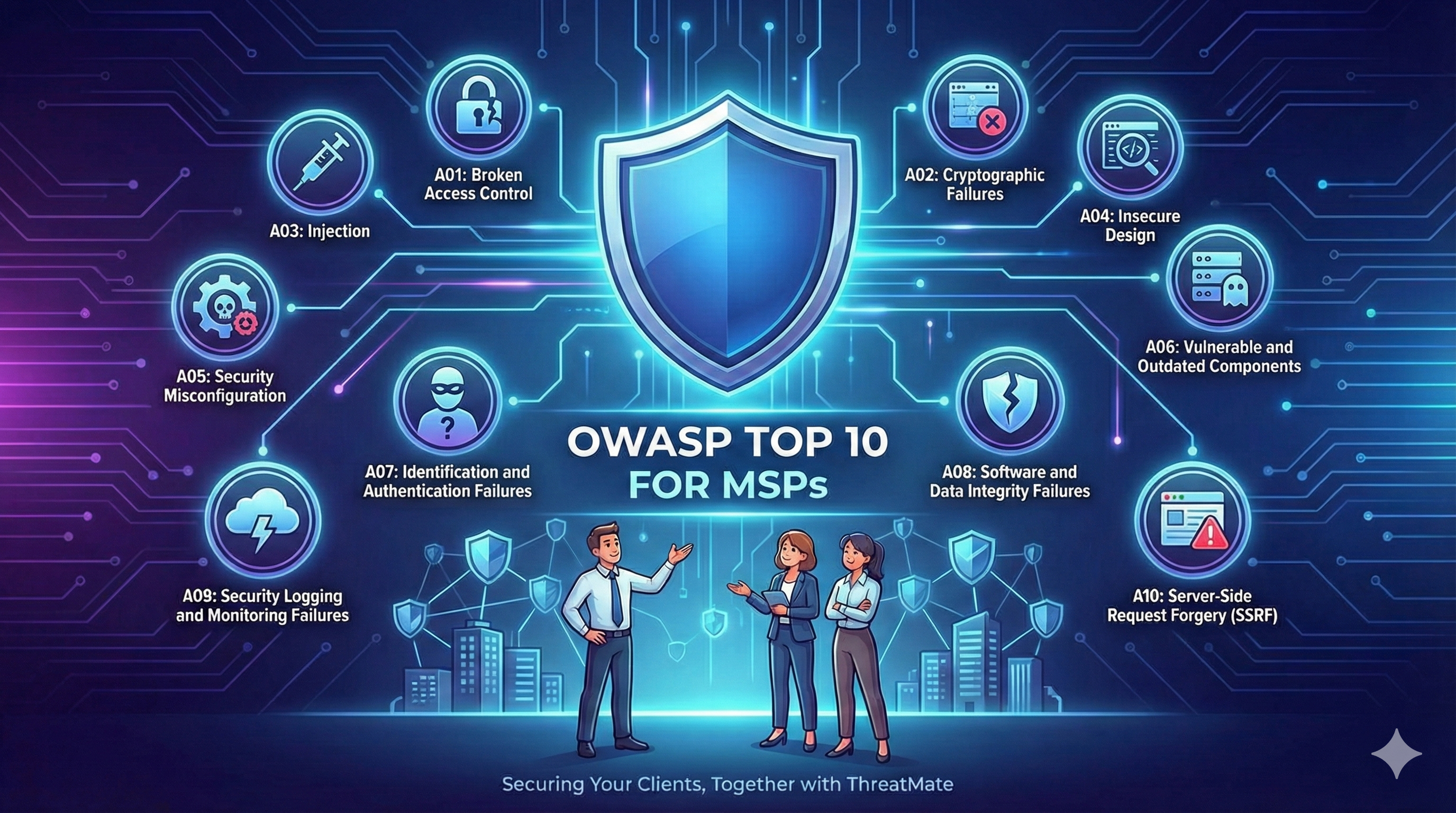
The 2021 OWASP Top 10 (Current Version)
- A01: Broken Access Control – Failures to enforce proper restrictions on what authenticated users can do.
- A02: Cryptographic Failures – Weak or missing encryption of sensitive data.
- A03: Injection – Untrusted data sent to an interpreter (SQL, OS, LDAP, etc.).
- A04: Insecure Design – Missing or ineffective security controls in architecture.
- A05: Security Misconfiguration – Default settings, incomplete configs, open cloud storage.
- A06: Vulnerable and Outdated Components – Using libraries or frameworks with known flaws.
- A07: Identification and Authentication Failures – Weak login flows, session issues, credential stuffing.
- A08: Software and Data Integrity Failures – Insecure CI/CD pipelines, unsigned updates.
- A09: Security Logging and Monitoring Failures – Lack of visibility into what's happening.
- A10: Server-Side Request Forgery (SSRF) – Tricking a server into making unintended requests.
Why MSPs Should Care
Understanding the OWASP Top 10 helps MSPs:
- Ask better questions during vendor assessments
- Identify warning signs in client environments
- Explain risk in terms clients can understand
- Support secure development practices when advising clients
Practical Takeaways
- Know the list. Even a surface-level understanding helps when evaluating software or explaining risk.
- Use it as a checklist. When onboarding new clients, ask about their web applications and how they're secured.
- Automate where possible. Tools like ThreatMate can scan for common vulnerabilities tied to the OWASP Top 10.
Ready to secure your attack surface?
See how ThreatMate helps MSPs identify and remediate vulnerabilities across their client base.